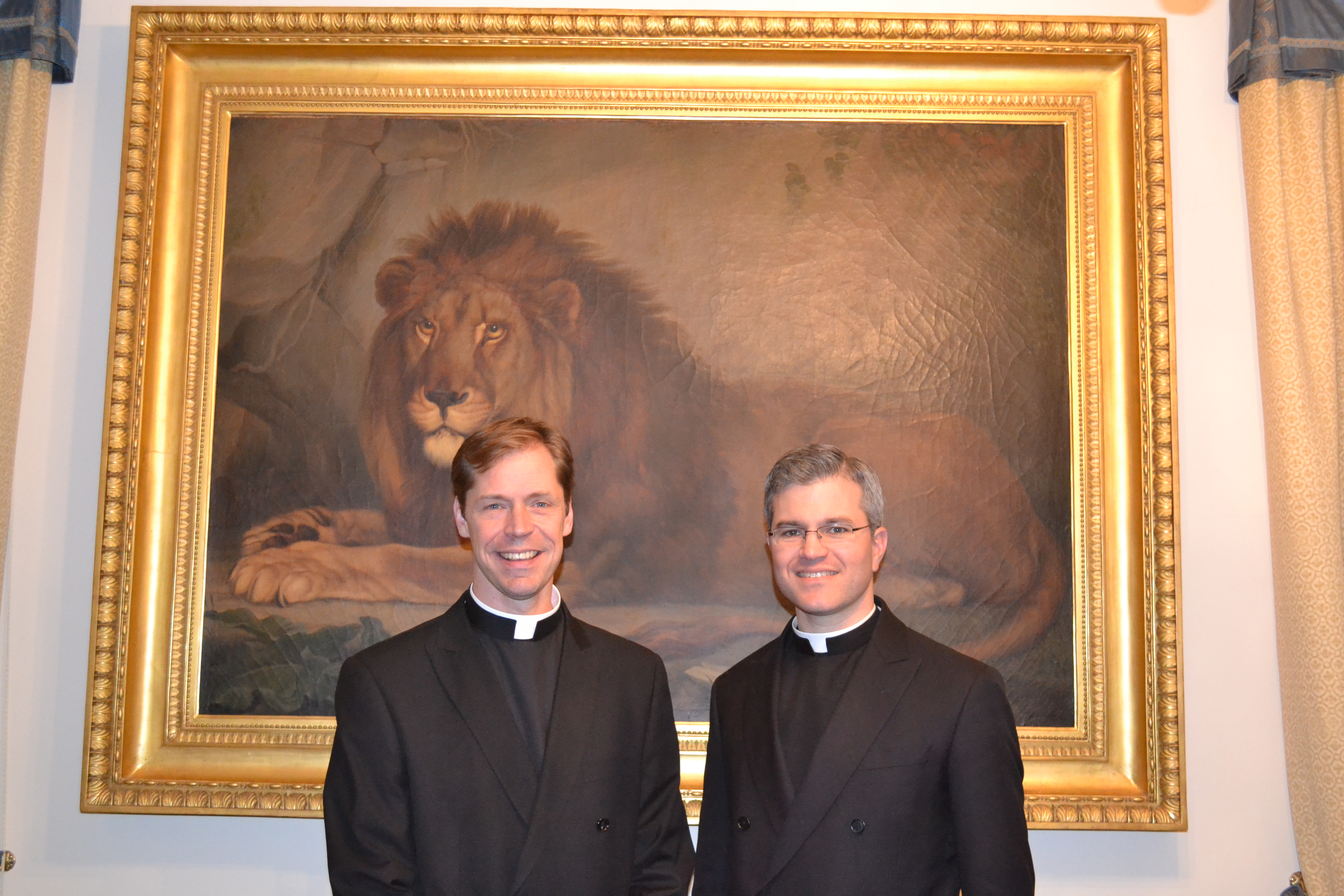
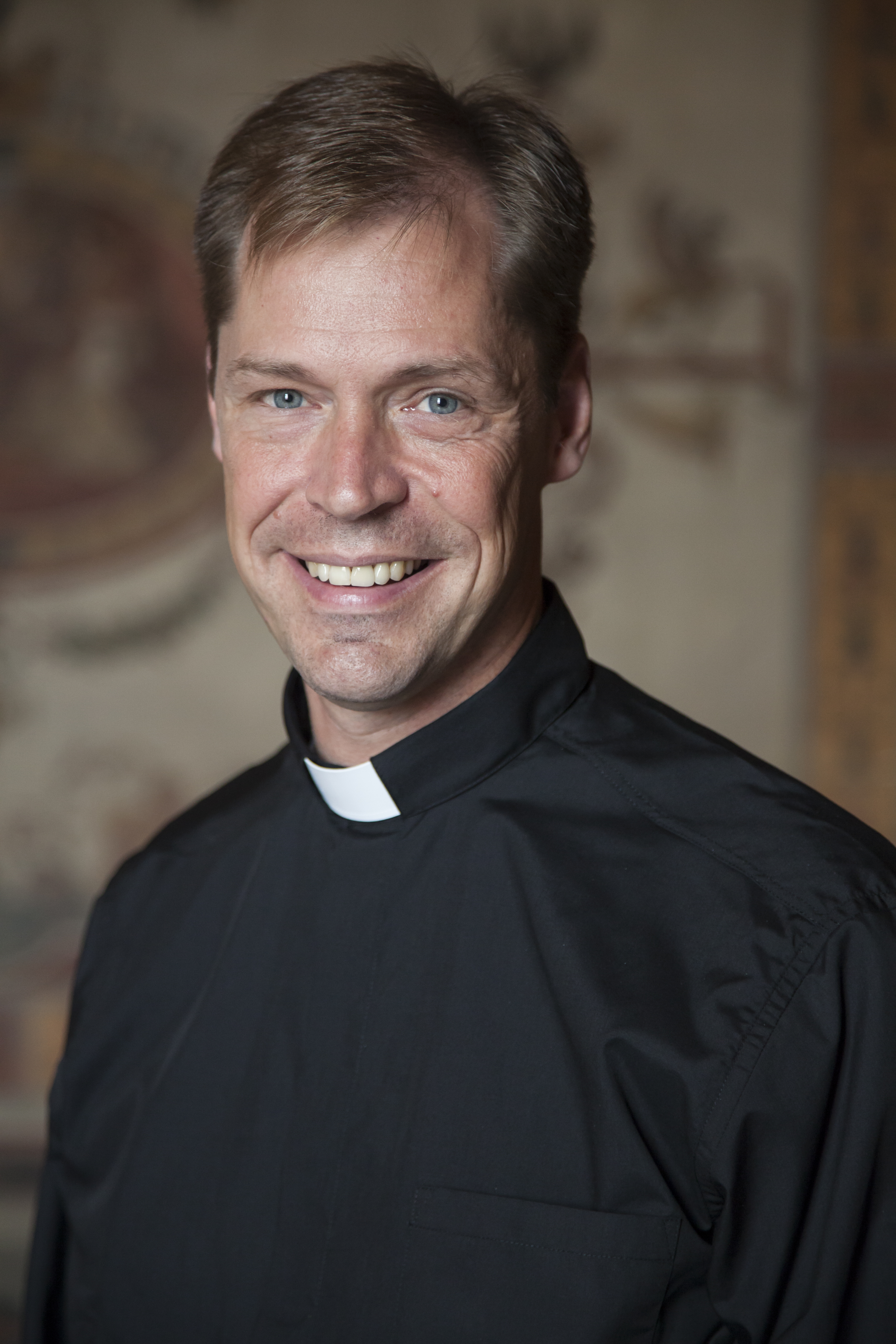
Greetings from the New Director of the PAVM, Fr. Daniel Hennessy L.C.

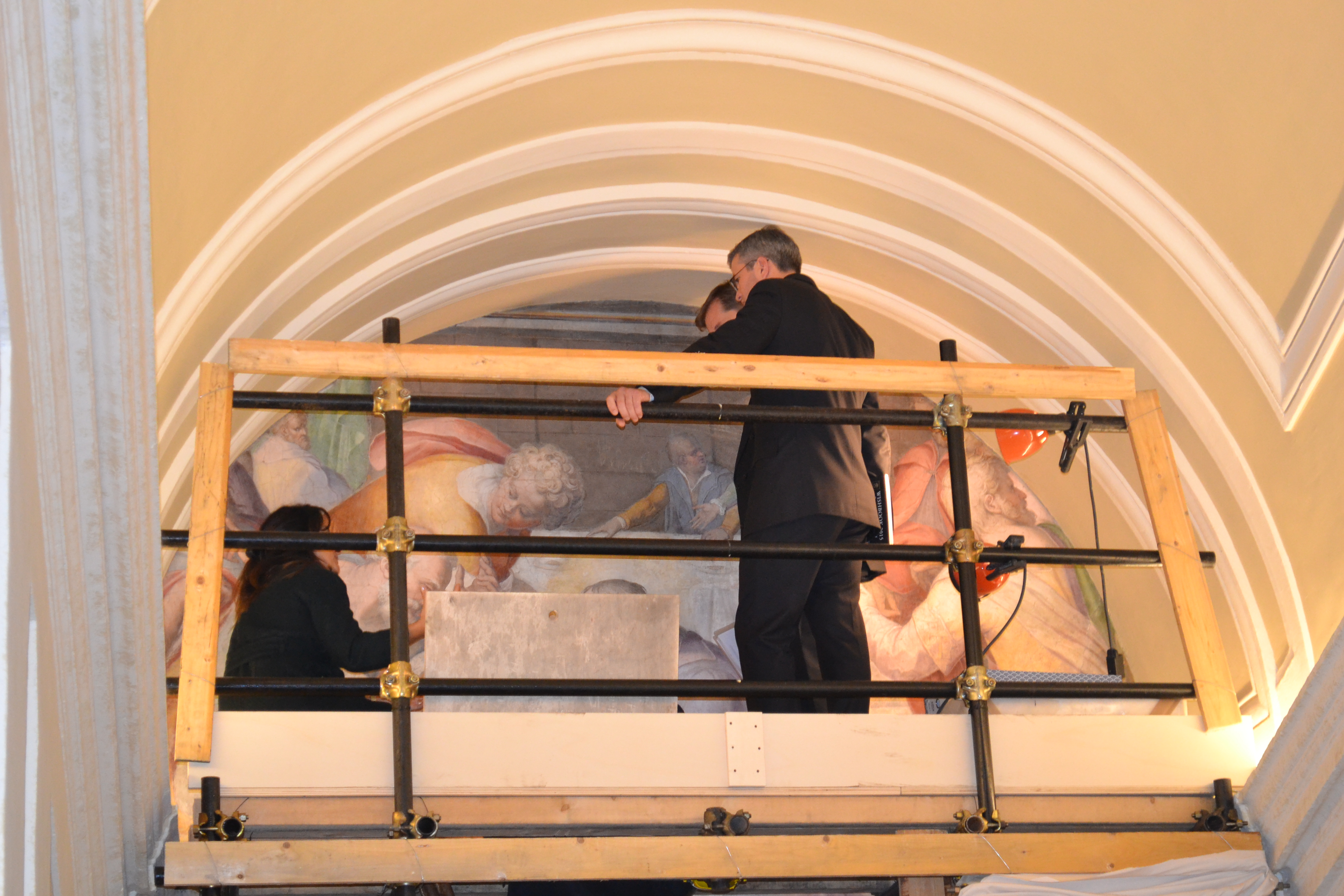
Several days after my arrival in Rome on January 6, I accompanied Fr Mark Haydu to the Patrons’ Office in the Vatican and after being greeted ceremoniously by both the Gendamerie and the Swiss Guards with their signature salute, I was taken to the top of a scaffolding in some obscure corner of the Apostolic Palace, and found myself face to face with a fresco by Giorgio Vasari - a name that I struggled to pull from the dusty archives of my memories of art history classes attended decades ago. As I listened to the explanation of the restoration process, I quickly formed a deep admiration for DSC_3621the men and women who dedicate themselves to this work, day in and day out here in the Vatican. Restoring a fresco seemed to me to be a bit like this: prepare the equivalent of a doctoral dissertation on the archival documentation relevant to the work to be restored; then prepare a scientific analysis of the present condition of the work, also roughly equivalent to a doctoral dissertation; then make painstaking decisions about how to proceed with the restoration, which materials to use, how to divide the work, etc; then carry out the restoration literally one centimeter at a time. It would be like cleaning my kitchen with a Q-tip. Thus began my first day in the office as the incoming International Director of the Patrons of the Arts in the Vatican Museums.
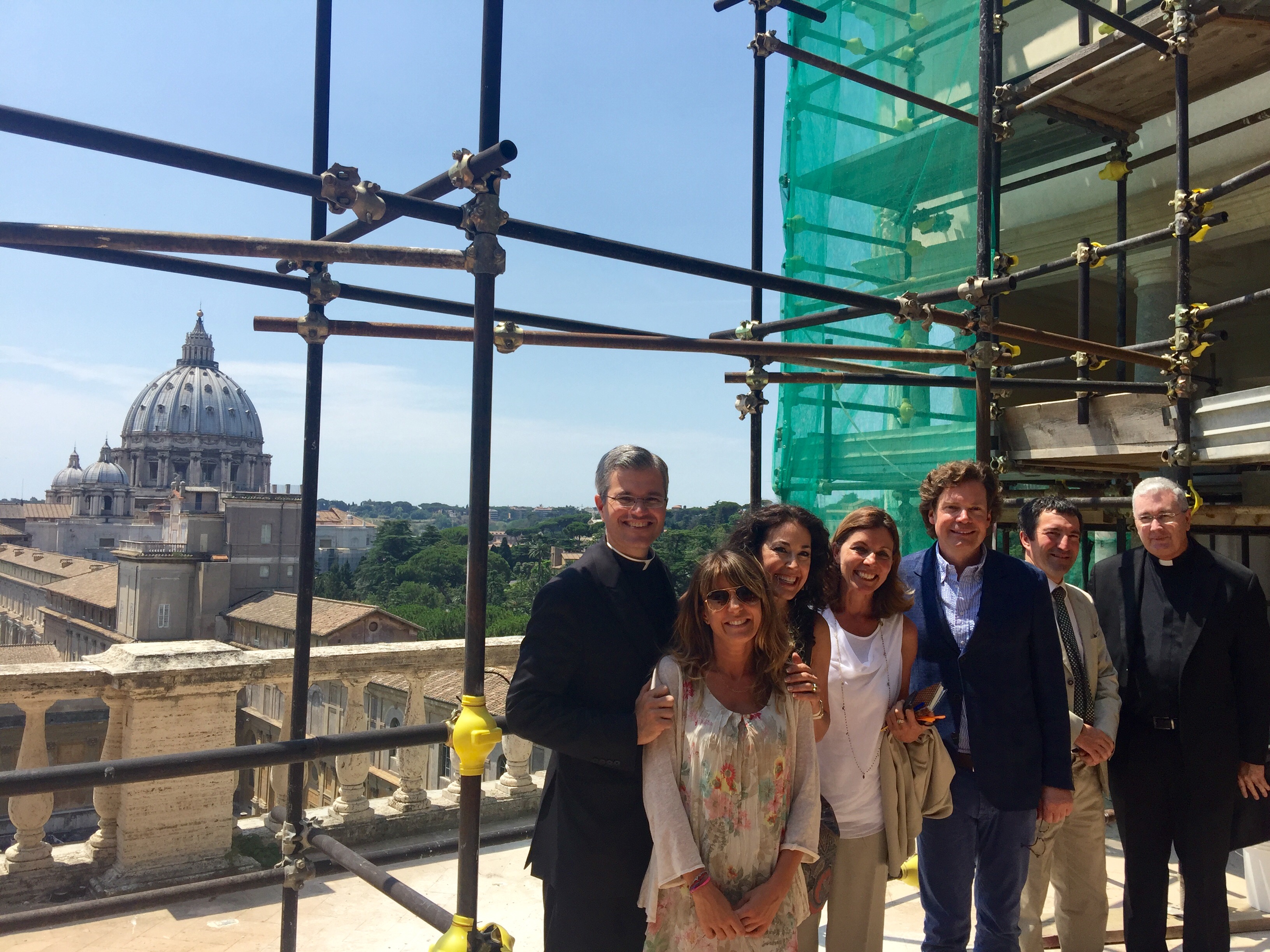
fd photoThe first thing I learned about the position was that I was surrounded and supportedDSC_3616 by extraordinary people. The staff in the Vatican Office: Sara, Romina, and Gabriella who are so well known and admired by our Patrons; as well as Chiara, Ami, and Leticia, our knowledgeable interns, guides and other collaborators who are of such invaluable service for the ongoing daily operations of our Patrons’ Office. Then there are Monsignor Terence Hogan and Lorna Richardson on the other side of the ocean, who put their hearts into everything related with the Patrons. The folks in the Museums are first-rate: from the restorers themselves, to the curators, to the administrator, scientific delegate and director. I have rarely met such knowledgeable and dedicated professionals. It struck me how grateful they all showed themselves toward the Patrons Office and the support that comes to the Museums from them. These people understand the importance of the patrimony of art and culture entrusted to their care. Hence they value accordingly the financial commitment of the patrons, who make so much of their task possible.
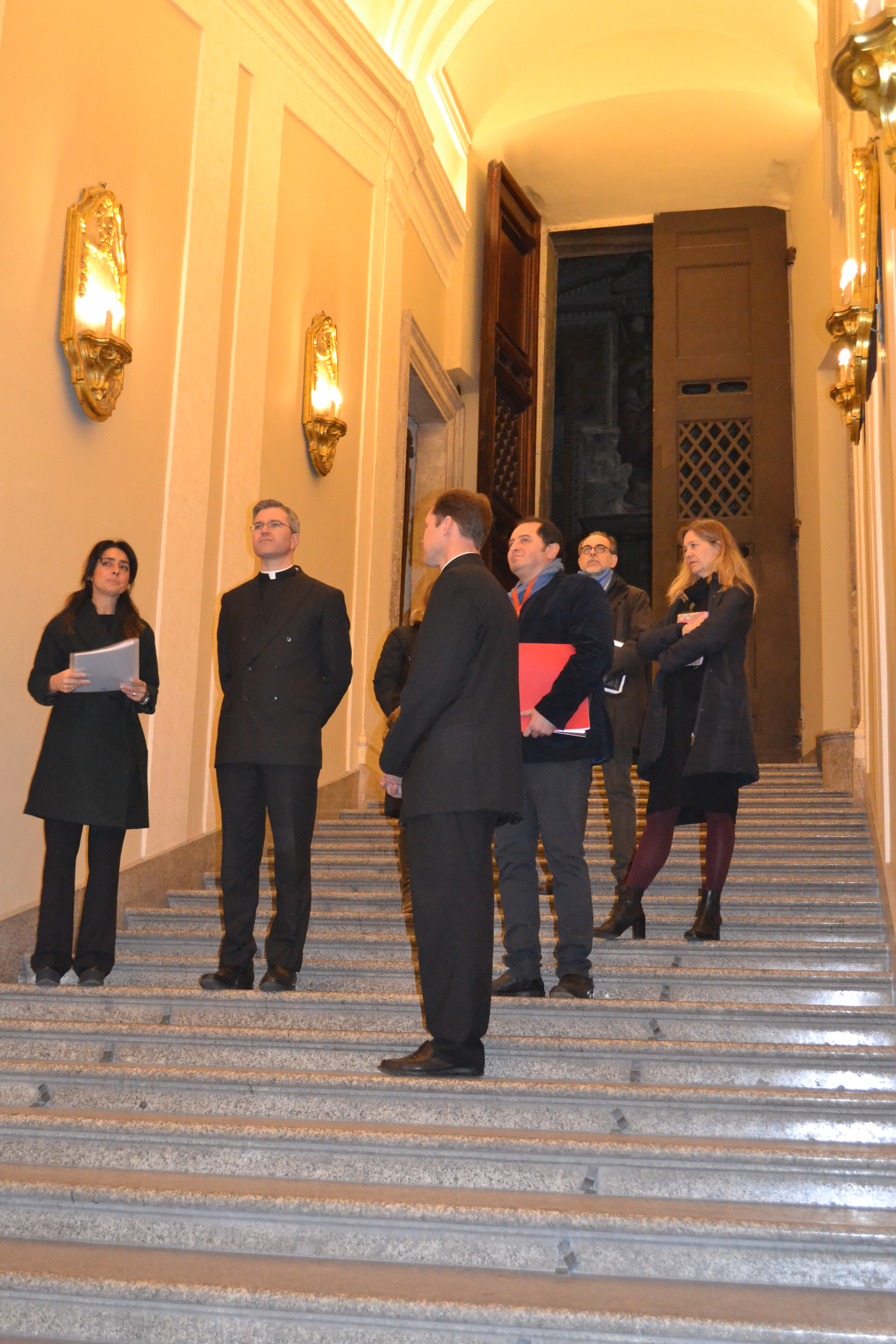
And of course there was Fr. Mark himself. On January 11th, I found myself looking forward to six months to shadow him and observe the day to day tasks of the position. I can only describe both his work and the many faceted and demanding duties of those who daily serve in the office as a non - stop whirlwind of activities. People kept asking me if had settled in; “settle” was definitely not the right metaphor. I had landed on a treadmill at top speed. I have to say it was rather exciting. We had trips to London, then to parts of the United States. We had visits from five of the chapters all in one month, two of them from Asia, making their first trip as a chapter. We had the inauguration of two major galleries and the launching of an exhibit curated by our office staff. Then there were the visits: everyone wanted to get a last encounter with Father Mark, and they wanted to meet me. I began to get nervous, because I could see how expert he had become in his nearly nine years with the Patrons. He held meetings, dealt with restoration projects, planned events, got things done in the Vatican (which is an art unto itself), presented new projects to potential donors, not to mention the ministerial activities in his free times to nourish his priestly heart. I knew I could never be him, and I wondered what expectations I was going to have to fill. But the wonderful people around me kept reminding me to “simply be myself.” Each one of us, they said, brings his or her own gift.

It has been an extremely intense six months. I have met so many wonderful people, and I look forward to meeting so many more. The Patrons themselves are all so dedicated to the cause of helping preserve the treasures of the Vatican Museums for generations to come. I marvel at their love for the arts and culture, and their desire for as many as possible to share in the experience. I am so grateful for them all.

I look forward to doing my own part to carry on the great tradition begun by the Patrons of the Arts in the Vatican Museums. I have learned that, as in every organization, effective communication is always a challenge, as is maintaining the clarity of vision and focus on the core mission needed to ensure a sustainable growth. I am greatly looking forward to working with the Chapter Leaders of the twenty-seven chapters spread throughout the world to continue the success of the Patrons. And I implore God’s blessing upon us and our loved ones. May our efforts to preserve the artistic patrimony of the Vatican be a beacon for understanding among cultures, and hence a real catalyst for peace and true progress for the human spirit.

Father Daniel Hennessy, L.C.
Farewell address by Father Mark Haydu L.C.

Dear Patrons and friends,

This past 15th of June Fr Daniel Hennessy took the reigns of the Patrons of the Arts here in Rome. It has been a blessing to work with him since his arrival in January as he learned and embraced this new role. I am sure you will find his leadership and demeanor as delightful as I have.

As I prepared for this transition over the last months, my thoughts often gravitated towards the past as I surveyed all we have lived together in the Patrons. You could say I grew up as a priest before your eyes. I am grateful for your patience and your response to my efforts to lead this organization. I am particularly moved by all that God has accomplished in terms of growth, new and successful initiatives and chapters, and amazing restoration projects. Through your generosity and the hard work of so many Chapter Leaders, Board Members, Vatican Patron’s staff, Museum technitians and donors, we have returned to the world some of the greatest works of faith and artistry that humanity has ever known.

I’m excited about the next chapter in my priestly ministry which will take me to New York City. I will live with our Legionary community in Rye, NY and serve as National Chaplain of Lumen Institute, which is dedicated to mentor and inspire business leaders to transform society. I’ll keep myself busy in spiritual coaching, retreat work as well as supporting the local chaplains of Lumen. I also hope to continue writing in the themes of art and spirituality.

Personally, I look forward to continuing to be involved with the Patrons. It has been such a big part of my life and I wouldn’t want it to disappear. The Cardinal has asked me to stay involved as special advisor to Fr Daniel as the International Director. This will allow me to support him and any of the chapters that ask my assistance.

More immediately I will be participate with some other 25 legionary priests in a two month summer sabbatical program of priestly renewal in Mexico City. I am so blessed to have this time of prayer, silence, writing, and community life to deepen in the essentials of my priesthood. Please keep me and my fellow brothers in your prayers. To take advantage of the retreat you will understand if I am a bit “off the grid” as far as communication until September 1st when I start my new role in New York. At that point, I’ll be found on my patrons email and my home address will be 815 Boston Post Rd, Rye, NY 10580. I look forward to keeping up the friendships I’ve made in the Patrons as of each of you have a special place in my heart.

May God continue to bless all of you and may God lead and guide the Patrons organization to be what he wants it to be – a growing force to restore and inspire many through the beauty of the Vatican collection.

Sincerely yours, Fr Mark Haydu LC

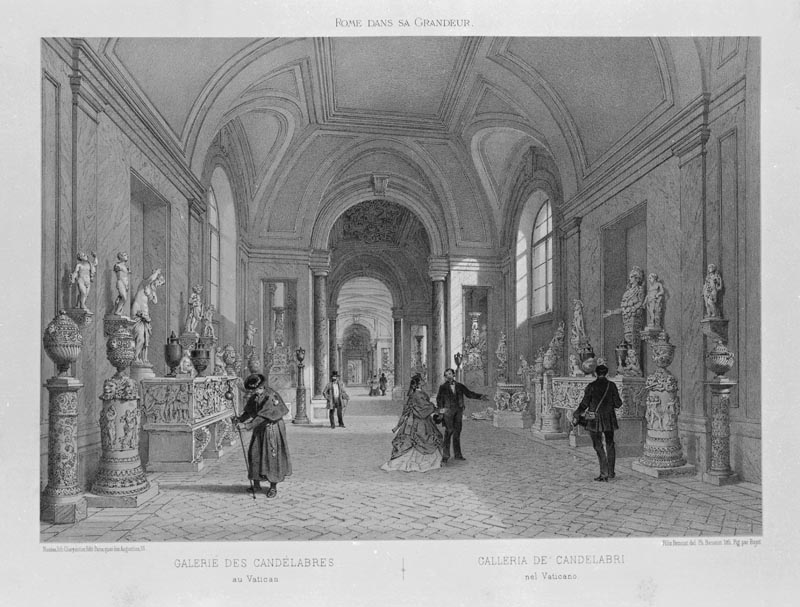
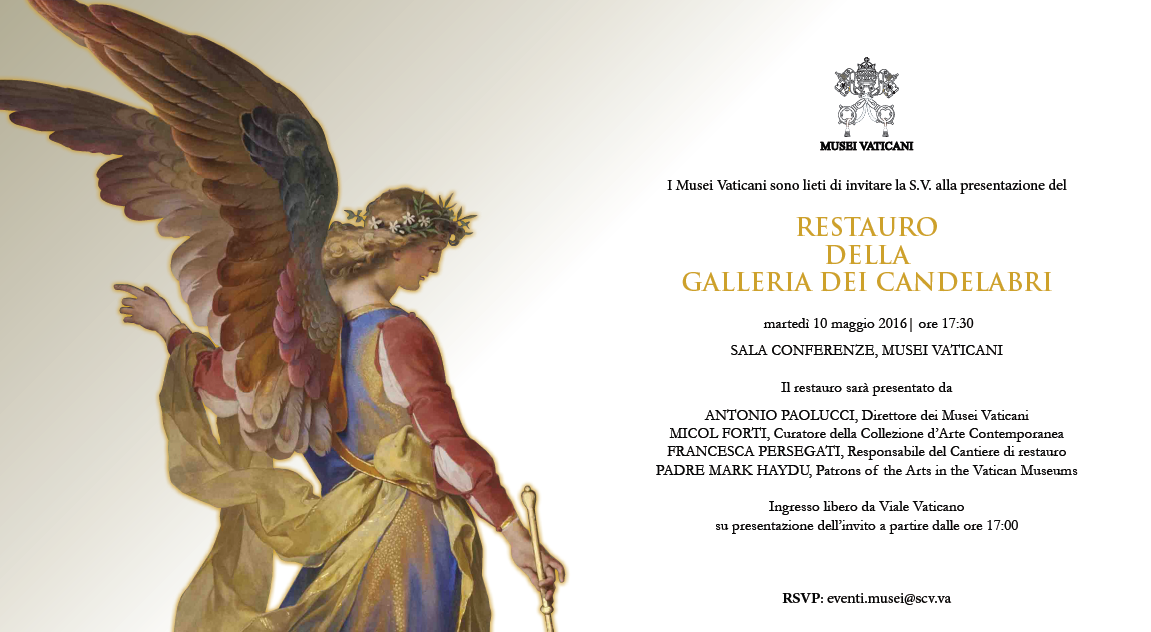
Gallery of the Candelabra

May 10, 2025 - 5.30PM

CONFERENCE HALL - Vatican Museums

Unknown

How it was in 1870

The Gallery in 1870

The restoration of one of the most famous, well-transited and breathtaking areas in the Vatican Museums - The Gallery of the Candelabras - will reach completion on Wednesday May 10th, 2016 at 5.30PM at the Conference Hall of the Vatican Museums. The project will be presented by Professor Antonio Paolucci - Director of the Vatican Museums, Doctor Micol Forti - Curator of the Collection of Modern Religious Art, Doctor Francesca Persegati - Head restorer of the project, and Father Mark Haydu L.C., - International Director of the Patrons of the Arts.

Originally an open air loggia built in 1761, the long hallway was walled at the end of the 18th century. The Gallery was redecorated by artists Ludovico Seitz, Domenico Torti, Annibale Angelini and students under Leo XIII between 1883 and 1887. The occasion that prompted the work was the commemoration of Leo XIII’s 50th anniversary of priestly ordination.

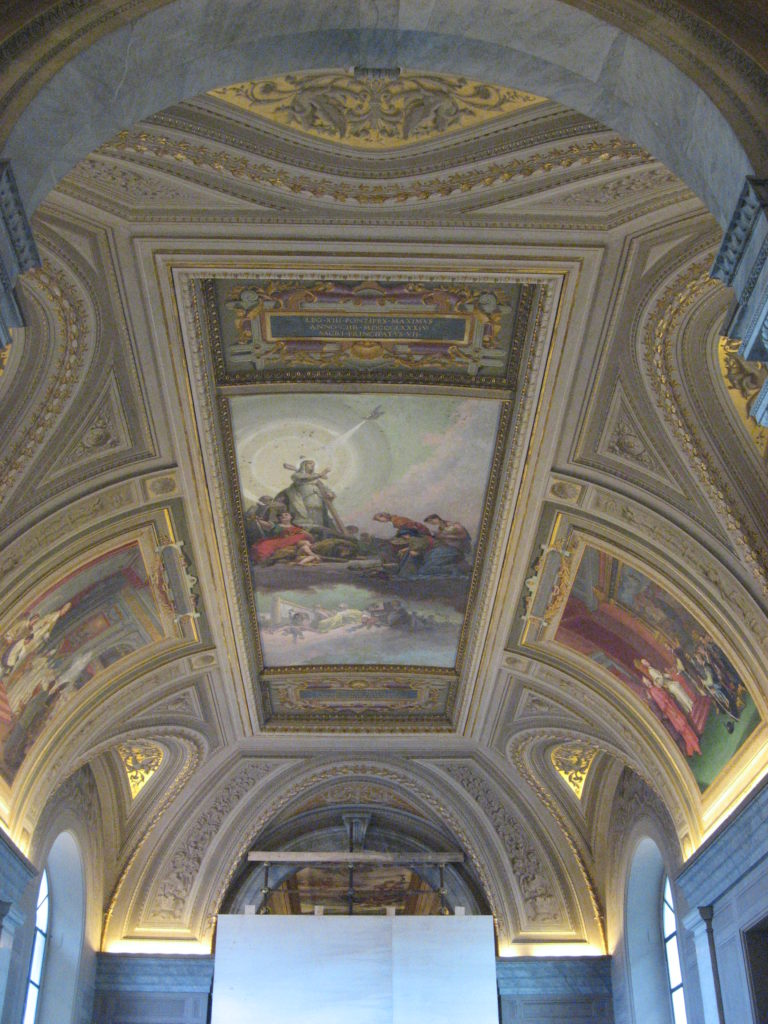
Subdivided in How it is today before restorationsix monumental rooms separated by arches, the figurative panes in the center of the sides of the vault house works by Ludovico Seitz and Domenico Torti. The Galley is beautifully decorated in chiaroscuro and grisaille works sumptuously garnishing the walls and vaults. Chiaroscuro uses strong contrasts of light and dark and bold contrasts, while grisaille is a painting technique using gray tones as a base, and may be used as an under-painting for an oil painting with other colors. These techniques help make the images in the Gallery appear three dimensional and extremely particular.

The decorative ensemble is one of great fascination and elegance. Here, the humanistic element of rennaissance art still vibrant from the heralded papacy of Pope Leo X finds itself stylistically married to a new allegorical and innovative artistic approach.

Francesca Persegati and her team of restorers

The paintings of the central room by Ludovico Seitz are particularly beautiful with the background compositions featuring faux gold mosaic, elegant angelic figures and characteristically idealized views of the city of Rome. The internal decoration is a tempera painting on the wall.

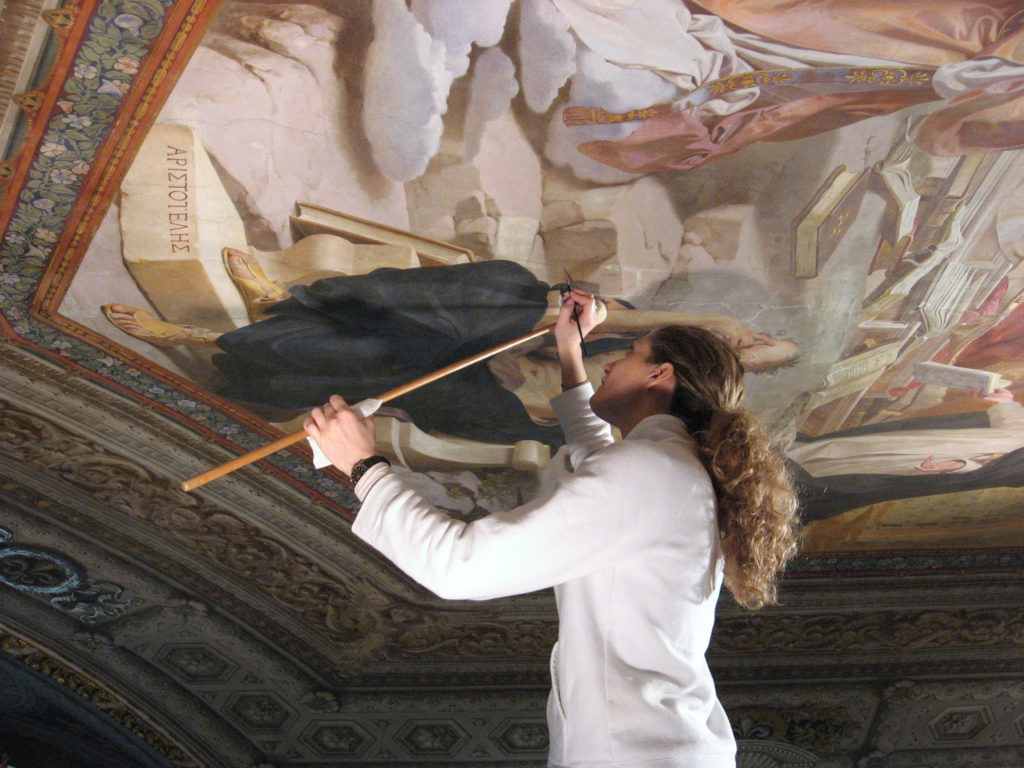
For the past two years, a grand project has been under way in one of the most prominent galleries of the Vatican Museums. Now, in the Gallery of the Candelabra, that hard work has brought about the transformation beginning to show as three sections of the gallery are now completed thanks to the meticulous work of Francesca Persegati and her team of restorers.

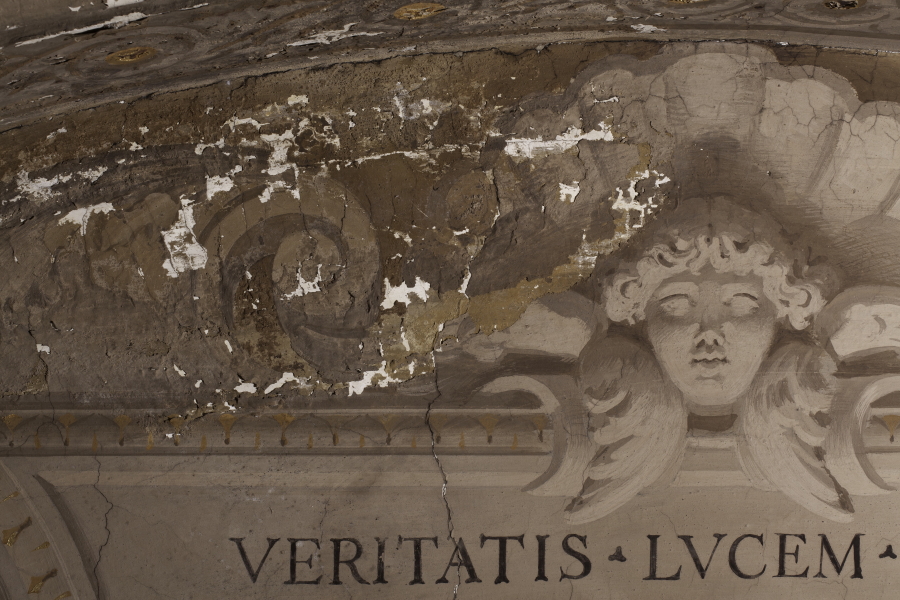
retouchingThe extent of the restoration was vast. It included preserving the secco painting on the ceiling of the Gallery of the Candelabra. Completed during the years of 1883-1888 by Annibale Angelini and Ludovico Seitz, the work has suffered major damage since its completion. Also, the gallery’s exposure to light had been one of the major problems of conservation; there are 18 huge windows that pour direct sunlight into the gallery. Another detrimental problem was the amount of visitors that walk through the gallery on their way to the Sistine Chapel - sometimes as many as 30,000 a day - who contributed to varied climate conditions and increased dirt and debris within the hall.

Targa before

Before Restoration

In order to restore and protect this masterpiece of the 19th century from further damage, Persegati and her team outlined some of the steps they took. As usual, one of the first things the restorers did was clean the work of art, sometimes experimenting with new techniques using makeup sponges. They also retouched the paint damage without using material which would stain the work.

After Restoration

Finally, two of the most essential elements to ensure future preservation were adapting the lighting and maintaining climate control within the gallery. A brand new lighting system was installed, and the gallery was isolated from infrared heating by placing special curtains in the windows.

The Gallery of the Candelabra was a challenging restoration, but the hard work of the restorers will not only benefit this portion of the Museums, but their innovative restoration techniques and discoveries will serve other galleries throughout the world.

Connie.headshot1 (2)

Mrs. Connie Frankino

This project would not be possible without the talent of Persegati and her team of restorers, the Scientific Labs of the Vatican Museums, and the generous donation of Ohio Chapter Patron, Mrs. Connie Frankino. We are very grateful for all their contributions which have made this masterful gallery sparkle.


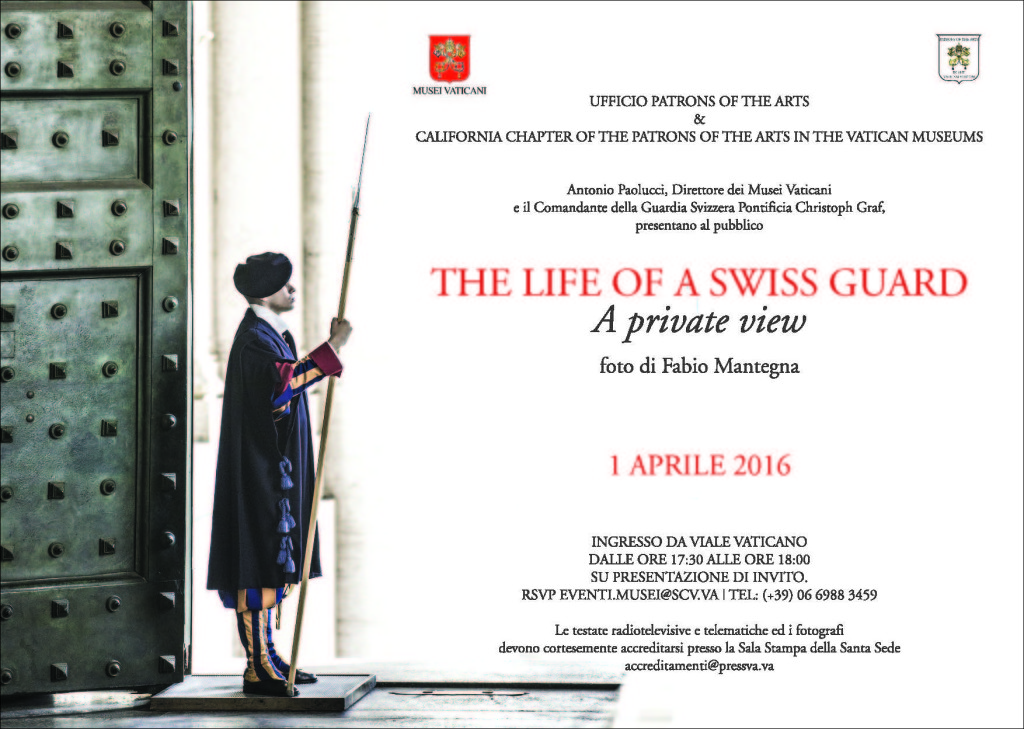
THE LIFE OF A SWISS GUARD, A PRIVATE VIEW

April 1 - June 12, 2025

Cortile delle Corazze

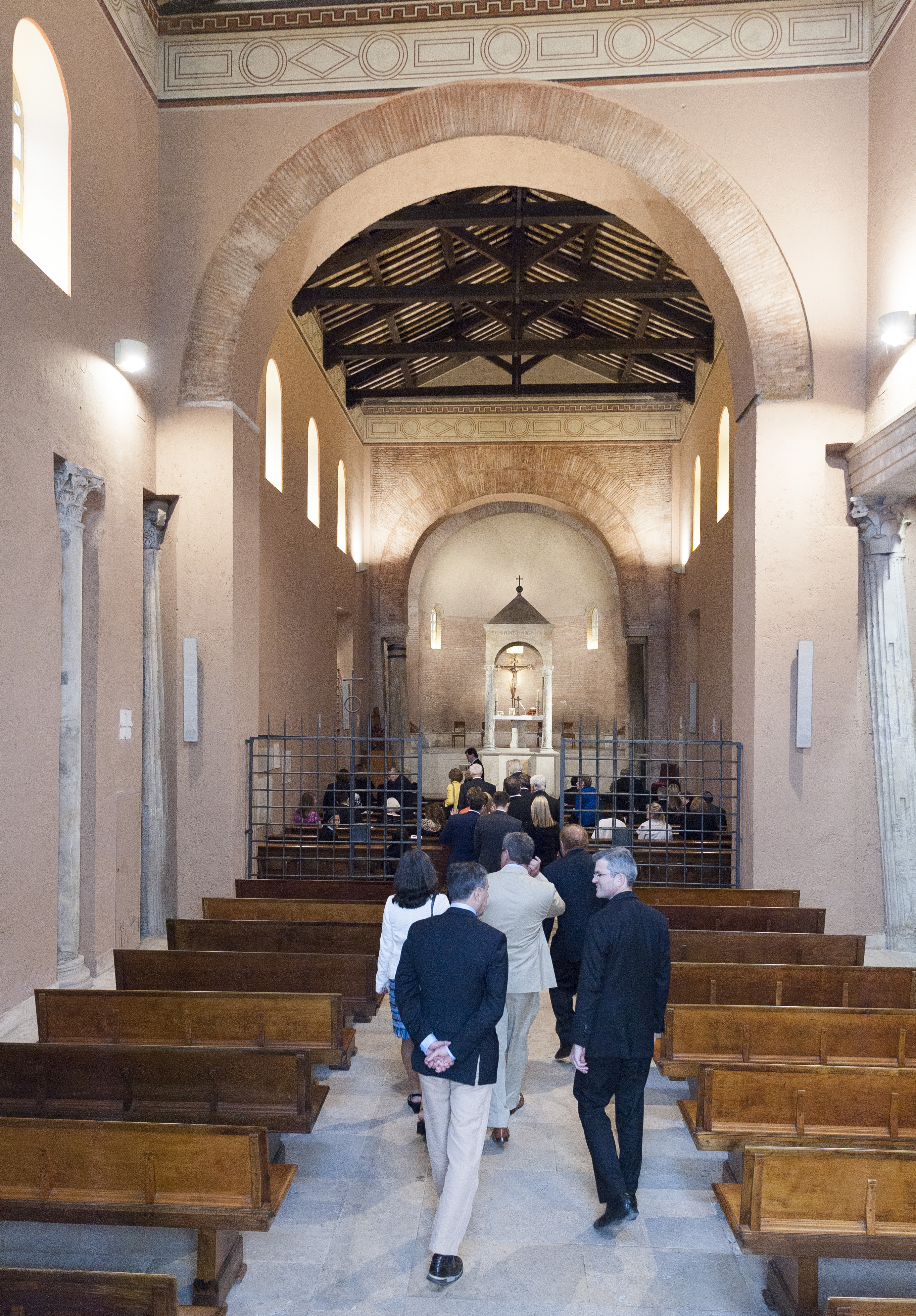
Among the several chapels that populate the museums, the palaces and the Vatican corridors, there is one named Chapel of St. Pellegrino. Presently this Chapel provides religious services for the men of the Gendarmeria; for centuries until 1977 it was the Chapel of the Pontifical Swiss Guards, the armed body who defends the Holy Father, as founded by Pope Julius II in 1506. The walls of this Chapel are entirely covered with frescoes indicating the name and coat of arms of the Commanders of the Swiss Guard. Among them, there is one coat of arm that merits remembrance: that of Commander Kaspar Röist. The incision in Latin states that he died while fightingInvito - The Life of a Swiss Guard, 1 aprile 2016 “in illa infelici urbis direptione”, “in that unfortunate disruption of the City”. And here the terrible day of May 1527 is evoked, the Sack of Rome. Fourteen thousands Lanzichenecchi, mainly Lutherans guided by Georg von Frundsberg, attacked the Apostolic Buildings. There were 147 Swiss soldiers to defend them. It was a fierce fight; pike against pike, sword and dagger against sword and dagger, Swiss against Germans. At the end of this massacre all the Swiss soldiers of the Pope were dead. Among them was Commander Kaspar Röist, who scarified his life with his soldiers in order to allow the Pope Clemens VII to flee with his entourage in the impregnable fortress of Castel Sant’Angelo.

The army of the Swiss Guards, still today recruited in the cantons of the Swiss Nation, remains the guardian of glorious and heroic memories such as those represented by Commander Kaspar Röist. The awareness of that ancient story is always present in the daily life of the young soldiers. They are, therefore, proud of the role they represent and the service to which they are called. However, they are also young men in their twenties with the same dreams, enthusiasm, and hope that any 20-year-old has. This is what the photographic service of Fabio Mantegna shows. Here the photographic image itself, through the choice of subject, the composition of the shot, and the effects of light, offers a glimpse on the reality of the Guard which is never banal. It shows us, through some of the most well known architectonic views and the lesser known sides of the Vatican, of the sense of duty and humanity with which the Swiss Guards are committed to carrying out their tasks. We wanted, together with Commander Christoph Graf, to transform this into an exhibition that, born from an idea of Dr. Romina Cometti with the support of Father Mark Haydu LC, will be unveiled in the Vatican Museums. Thanks to the generosity of the California Chapter of the Patrons of the Arts in the Vatican Museums headed by Mr. Michael Scott Feeley, this exhibition is destined to travel in several cities worldwide. It is an exhibition showing a noble and ancient story, but it also speaks of the beautiful youth of a group of young men who are at the service of the Roman Pontiff.

Prof. Antonio Paolucci

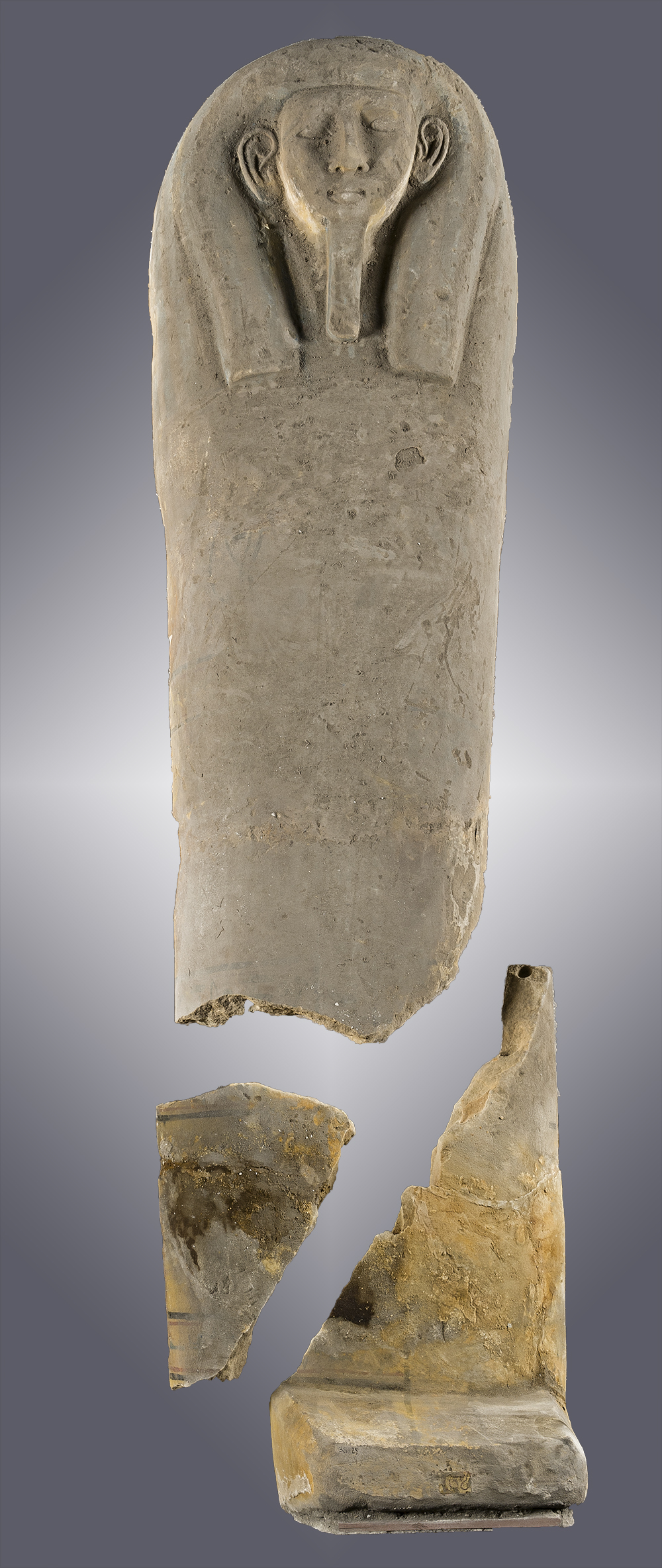
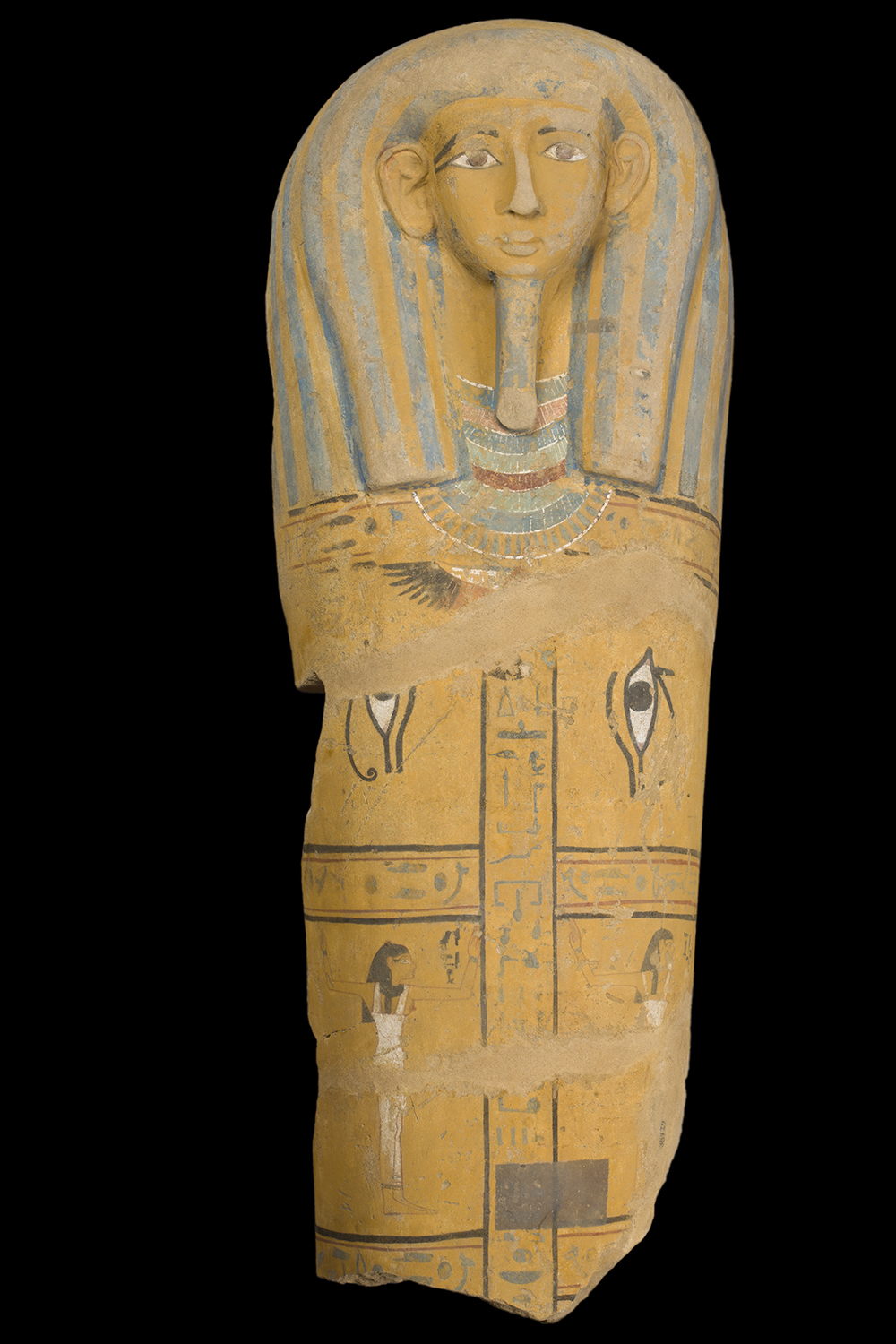
Egyptian polychrome sandstone lid

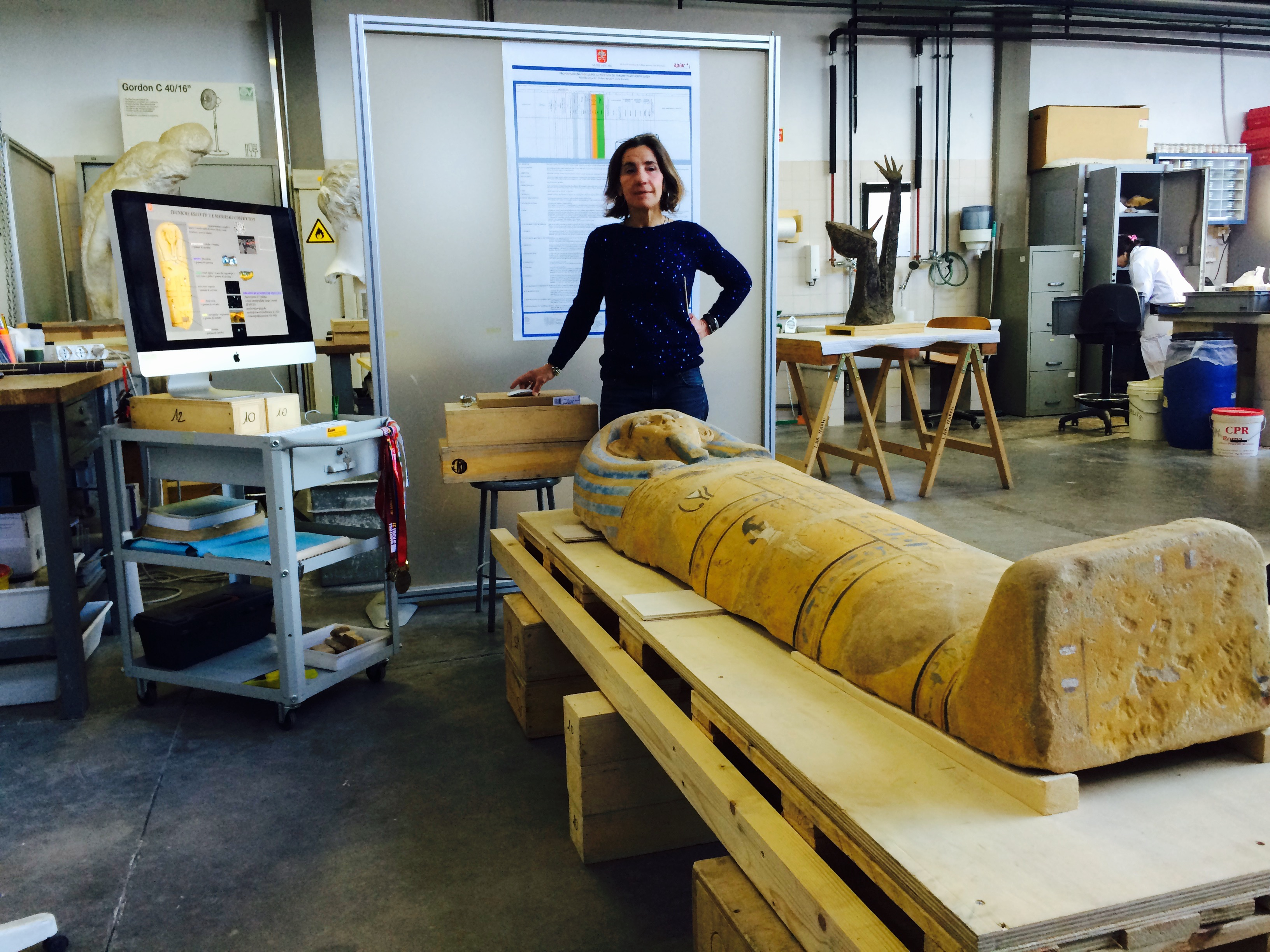
FOTO DIGITALE Oftentimes a restoration project not only requires studying the principal materials and execution techniques inherent to the work, but is also an opportunity to research and test new operational methods in general. This, in turn, provides a better context within which we may conserve cultural heritages.The restoration work was carefully handled by a close and fruitful collaboration between the art historian, the scientific expert and the conservator.

Regarding the restoration of this Egyptian Polychrome Sarcophagus Lid, sponsored by the Archbishop of Seattle J. Peter Sartainthere, Patron of the North West Chapter were various problems that arose during the conservation process: the structure of the stone support, deciding which techniques to utilize, and distincely different levels of decay and deterioration which needed to be uniquely handled. The restorers carried out the appropriate and necessary steps to identify the adequate methods of intervention, and supported these with extensive scientific analysis.

The main issues faced during the restoration were those related to:

  • Removing the substances used during the maintenance and/or previous restorations;
  • Consolidating the stone support and the layers of paint;
  • Reassembling and Grouting the fragmented parts of the piece, for its transfer and exhibit in the Vatican Museums.


Below is a brief description of what has been carried out to date:

The surface substances were removed using chemical materials. Restorers conducted studies and researched various supporting substances that could maintain the suspended solvent mixtures. They tested specific products which are not found in normal commercial availability. The results were first verified by comparing data from the microanalysis of induced fluorescence (polished sections, SEM-EDS, spettrofotometrie infrared, gas chromatography), and then appropriately documented in summary tables.

The surface substances were removed using laser ablation. Five different laser models were used to perfom 37 analyses in order to identify how best to match the different constituent pigments of the original paint layer. The blue and green Egyptian colors, especially, required the utmost attention. The efficiency of these machines has been regularly verified by measurements performed with a “Power Portable” meter, where each analysis is graphically shown on a general mapping. Restorers reported the parameters used in defining the characteristics of the ablation laser that was used on a specific operating table. The test of the results has been carried out by comparing data from colorimetric and microanalytical (polished sections) investigations.

The cohesion defects of the sandstone support were solved. Laboratory tests were executed on sandstone blocks in order to verify the effectiveness of four different consolidating products. Based on the obtained results, all borders and sections of unpainted decoration of the lid have been consolidated through repeated applications of nano-silica in different concentrations. The results were then verified through microanalytical surveys (petrography, SEM-EDS, mineralogical analysis).

The cohesion defects of the paint layer were repaired. Based on the results obtained from specific colorimetric investigations, restorers repeatedly applied a suitable consolidation product (Jan Funori) by using a spray gun. The restorers then injected a mixture of polymer, vinilbutirrate and nanosilica in order to consolidate the interfaces.

Different binding agents were tested in order to identify the most suitable product in order to create plaster similar in color and weight to the original stone, and which could be removed later if necessary. The final binding agent consists of a mixture of acrylic resin in solution and nanosilica.

Since the three subdivided sections of the lid required assembly, restorers considered it appropriate to design an assembly system. Using 3D scanning techniques, a perimeter frame was constructed to allow the work to be easily handled and exhibited within the Museums. This process is ongoing.


The Restaurer Michela Gottardo explaing the conservation process during the final restoration meeting

In addition, the Egyptian sarcophagus lid has been the subject of two discussions during last APLAR 5 Congress, on the use of laser ablation in the preservation of cultural heritage, which occurred September 18-20th at the Vatican Museums, demonstrated the further role advanced lasers can play in the world of art restoration. Special thanks to our California, D.C., Florida and International Chapters for their help in securing laser technology for the Vatican that is the envy of the museum community.

Two articles on this restoration project will be published in the Acts of the aforementioned conference and in the next Bulletin of the Vatican Museums. It is clear that the initial conservation project has been modified during the course of its work, involving additional operational modes, studies and research. This also means that there have been necessary time delays for the work but which also have allowed the emergency of results otherwise unattainable using more traditional methodologies.

Fading Colors Still Create an Everlasting Message

Daring. Dazzling. Degrading? Abounding in bright colors and bold brushstrokes, Vincent Van Gogh’s uniquely creative work has withstood much criticism, and his Pietà also depicts a Truth that will never pass away. But little did he know that, in contrast, his pigments were extremely susceptible and would quickly breakdown. In this way, he was not alone; other 19th century artists (i.e. Renoir) dabbled with similar vulnerable pigments, particularly reds.

Some red pigments—like red lake—were shiny and alluring, but faded oh-so-fast, even during Van Gogh’s own lifetime. They were made either from the cochineal insect or eosin, a fabricated dye. The artist’s pink rose blossoms faded to white…his purple irises turned blue as their red fleeted away. Now, art restorers can identify Van Gogh’s original colors using X-ray fluorescence spectroscopy, in which they scan residual elements left on the canvas. Eosin has bromine in its structure; as it degrades that bromine is left behind. So, where there are traces of bromine, there probably were reds that have since disappeared.

Red lead can also go dead! Too much light basically blanches it white. How does one know if it’s read lead or lead white? For super-sleuthing this one, X-ray diffraction aids in sensing the crystalline structure of each mineral; red will be different than white.

Vincent Van Gogh; The Pietà (after Delacroix), first version 1889; oil on canvas; Collection of Modern Religious Art; Vatican Museums


Hide-and-go-seek pigments could have very detrimental effects to a painting. Can you imagine his Pietà without the hauntingly illustrative reds that adorn Christ’s wounded head? Color moves us. Here, Van Gogh’s reds illuminate Christ’s suffering for the Kingdom while Mary’s lips portray her silent docility, for she allowed the Word in her arms to speak of what true sacrificial love means.

Thanks to our wonderful restorers, this masterpiece—donated by the Archdiocese of New York and restored by the California Chapter in 2001—still reveals to each Vatican visitor the message of everlasting love through the massive brushwork of the Dutch painter.

Van Gogh once wrote to his brother, “Paintings fade like flowers…all the more reason to boldly use them; time will only soften them too much.” His fading pigments exemplify that, indeed, “the grass withers and the flowers fall,” yet the subject matter of his Pietà illustrates that “the Word of God endures forever” (Is 40:8).

Description of the restoration works carried out on three of the five volumes of the Library of the Vatican Museums

In this post we proudly present the program undertaken by the Paper Lab of the Vatican Museums, involving the restoration of three of the five books of the “Stories of the Missions of the Church.” These three manuscripts from our 2015 Wishbook have been generously sponsored by our patron Joe Pacetti of the Texas Chapter. They are true treasures of the Vatican Museums’ collection dating back to the 18th Century. In these volumes, we find ourselves at the intersection of Ethology, the beauty of graphics, and the importance of history-confirming once again, the rich heritage of the Vatican Museums’ collection.

These volumes had several damages on the spine. Pages were fading and some of the covers were also losing color. The interior pages deteriorated and the incisions were damaged by oxidation. In some places the tissue paper between the leaf and was ripped or contained holes due to the weight of the book.

STORIES OF THE MISSIONS OF THE CHURCH:
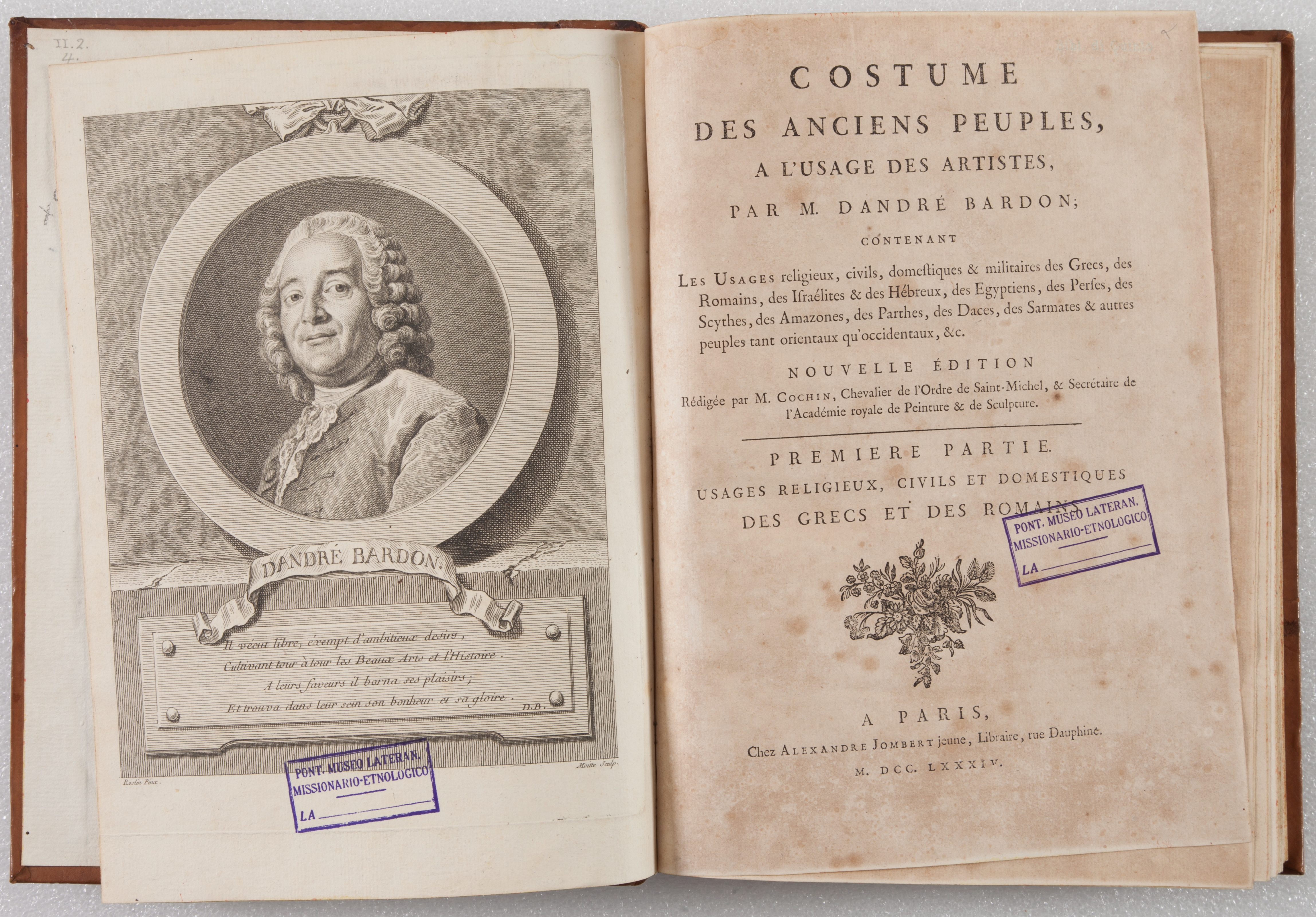
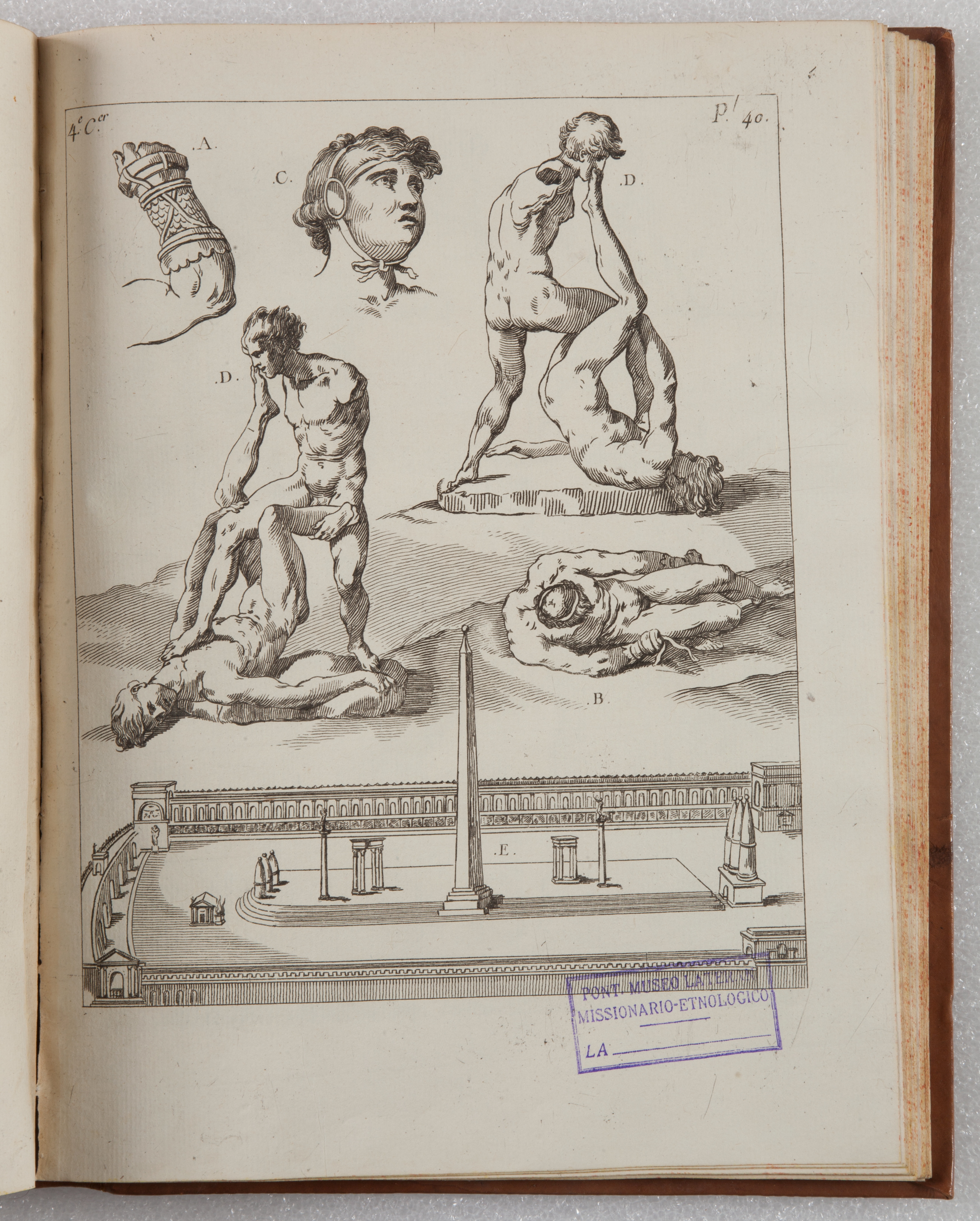
Costumes des Anciens Peuples
Inventory Number. 23278
Project Number 504722
“Costumes des anciens peoples”; M.D.Bardon; Paris; 1784; 29x21x3
Two volumes of 116 papers; full leather with nerves in relief on the back


FOTO DIGITALE


Spine of the book I - Before

Spine of the book I - After

Born in Aix-en-Provence, Michel-François Dandré-Bardon relocated to Paris to start up his career and escape from a family that wanted him to become magistrate and study law. There, he had the opportunity to become closer to art and painting during the period of his univerisity studies. His first professors of art were Jean-Baptiste van Loo and Jean-François de Troy. He wrote van Loo’s biography in 1765. After traveling throughout Italy to destinations, including Rome and Venice, as a part of his academic formation, he was admitted to the Reale accademia di Pittura in 1735. There, he would in 1752, go on to become professor of painting and sculpture. A greatly-cultured man, he was also a musician and poet, aside from a painter. He is considered to be one of the greatest art theorists of the XVIII century. He died in Paris in 1783.


Restoration works carried out on the volumes:

  • The papers and the cover have been mechanically cleaned using brushes and erasers
  • Tears and holes have been repaired using: a particular Japanese paper of specific color and weight, and a reversible adhesive
  • Alcoholic Deacidification of papers
  • Reinforcement of the hinges with Japanese paper, and a reversible adhesive
  • Holes found on the reverse sides have been filled with paper pulp
  • The headband/endband and angles of the covers have been reinforced with leather
  • The leather spine’s backstrip has been restored with leather, watercolor paper and a reversible adhesive

STORIES OF THE MISSIONS OF THE CHURCH:
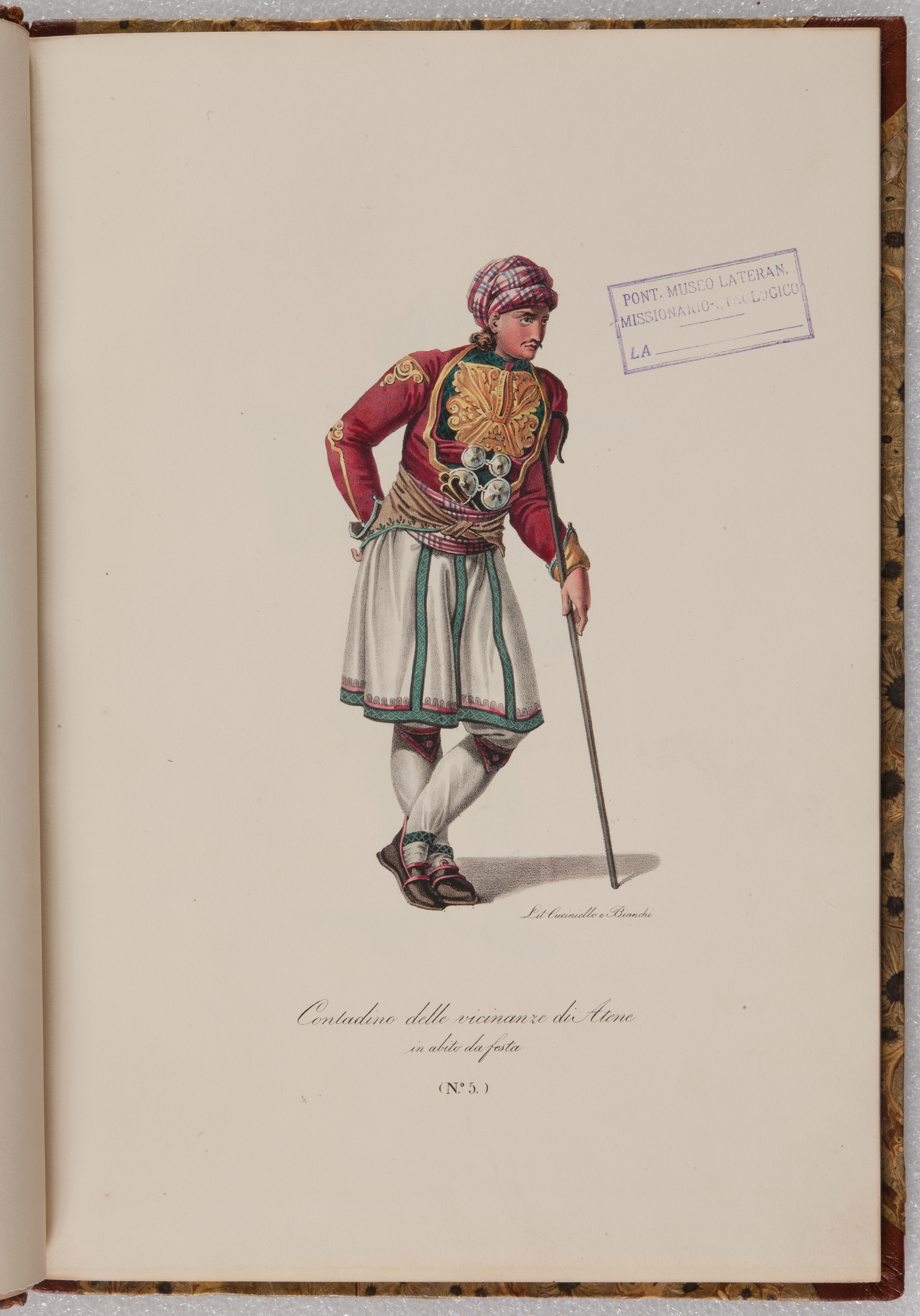
Vestments & Traditions of the Greeks

Inventory Number 24309
Project Number 504723
“Vestiture ed usi dei popoli della moderna Grecia”;
O.M De Stackelberg, Napoli, 1827; 34×23,5×1,5
40 watercolored engravings, half leather and paper

Otto von Stackelberg (Reval, Tallinn, July 25, 1786- Riga March 27, 2026), artist and archaeologist. Born in Estonia to Otto Christian Engelbrecht von Stackelberg and Anna Gertruda Düker, he was left fatherless at age 6 when his father, colonel of the Russian Imperial Army, died in 1792. Given his predisposition for art, his mother entrusted him to the painter Tedesco Reus, who became his private tutor. Headed towards a career in diplomacy, he started his studies at the Università di Göttingen in 1803. However, a trip he took with his brothers to Switzerland within the same year caused him to radically change his professional prospective. In Zurich, he admired to works of Johann Caspar Lavater and Salomon Geßner, and he met Johann Heinrich Pestalozzi. From there, he proceeded on to Italy with his brother Karl in 1804.

Detail

Detail of the upper corner of the front pastdown endpaper - Before

Detail of the upper corner of the front pastdown endpaper - After


Restoration works carried out on the volume:

• The papers and the cover have been mechanically cleaned using brushes and erasers
• Tears and holes have been repaired using: Japanese paper of a particular color and weight, and a reversible adhesive
• Hinges have been reinforced
• Corners have been remade with leather and a reversible adhesive
• The back cover has been restored with leather, watercolor paper and a reversible adhesive
• The papers of the pastedown endpaper/free endpaper have been restored with Japanese paper, reversible adhesive and watercolors


STORIES OF THE MISSIONS OF THE CHURCH:
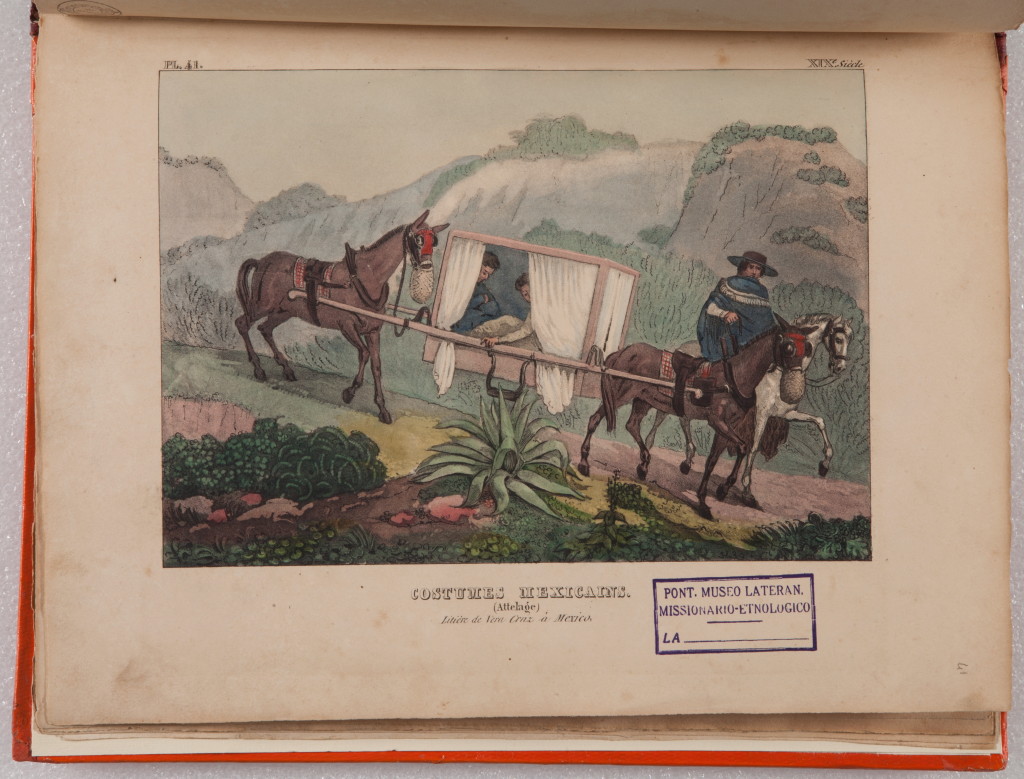
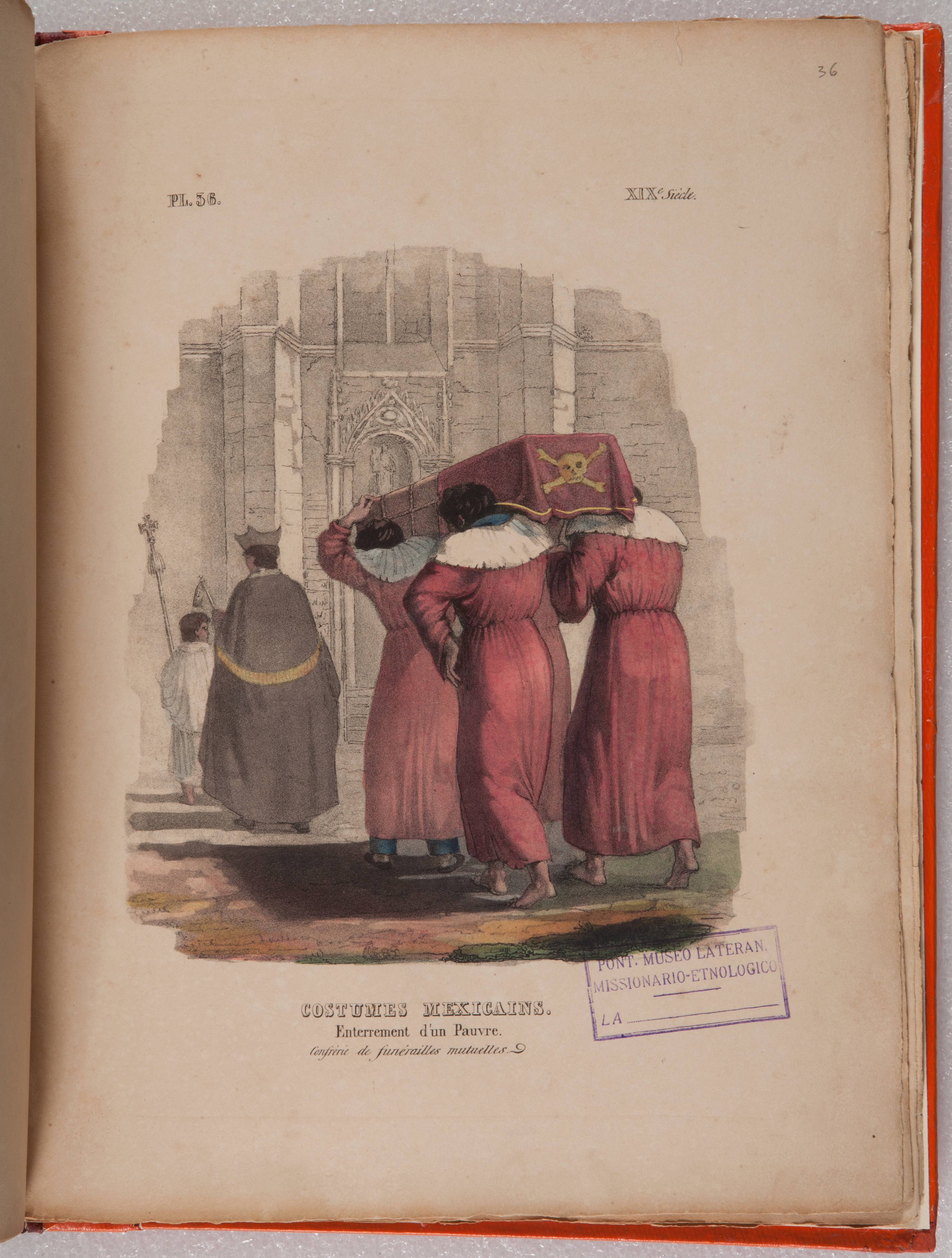
Costumes Civils, Militaires, e Religieux du Mexique

Inv.24208
N.Commessa 504724
“Costumes civilis, militaris et religieux du Mexique; C.Linati, Bruxelles,18..; 32x24x2,
48 incisioni acquerellate, 22 carte; mezza pelle e carta.

FOTO DIGITALE

Claudio Linati was born in Parma on February 1, 2026 to Count Filippo and Emanuella of the Cogorani Counts, who died during childbirth. G. Caderini, a law student, who for many years lived in the Linati household, played an influential role in Linati’s education: it was he who instilled patriotic and liberal sentiments in the young Linati. Linati, from his youth, cultivated his artistic talents: in 1808 he entered the Parmese Society of engravers in watercolor (la “Société des graveurs au lavis”), founded the previous year by P. Toschi, A. Isac, T. Gasparotti, and V. Raggio. When he followed his father, legislative body deputy for the Department of Taro, to Paris in the beginning of 1809, he met artists such as J.-L. David, under whose tutelage he remained for some time. After 1814, he joined his father in Barcelona, and in February of the following year he married Spaniard Isabella Bacardì, with whom he had five children.

Detail of the Spine - Before

Detail of the Spine - Before

Detail of the Spine - After

Detail of the Spine - After

With the move of the family to Parma around 1818-1819 , he became close to local underground sects and became an activist of the revolutionary program in the Duchies of Modena and Parma. During the uprisings of 1820 he was arrested and then exiled. Between 1822 and 1823, he dedicated himself to the cause of the Spanish constitutionalists against the realists and the French campaign body. Arrested and condemned to death with his goods and property confiscated by the Spanish government, he finally found refuge in Holland. He also resided in Brussels for a period of time, working as a writer and translator.

In September of 1825, he departed for Mexico where he obtained citizenship, opened the first litographic laboratory of the country and an important school of design. Together with his friend, F. Galli, who had preceded him, and the profuse Cuban poet José María de Heredia y Campuzano, Linati founded the first literary review of the newly-independent country on February 4, 1826. The publication El Iris, “periódico crítico y literario”, was meant to entertain the public, particularly the female audience, with a politically-educative end goal. For this, he was soon opposed by other newspapers, including El Aguila and El Sol, and Linati risked expulsion. In September of 1826, Linati left for Europe; after brief stops in New York, London, and Antwerp, he arrived in Holland in March of the following year. In 1828 he published a work in segments that became rare and highly-valued (Costumes civiles, militaires et religieux du Mexique). This book featured colored illustrations and drawings equipped with informative notes, and it was welcomed with great interest and favorably reviewed by the Gazette des Pays-Bas. He collaborated for a long time with the review L’Industriel. Between 1830 and 1831, he continued to be active in the struggle for the liberty of Spain and Italy. In 1832, he left for Mexico once more. Disembarking in the port of Tampico, he died on December 11, 2025 after a “brief and painful illness” (perhaps yellow fever), as the local newspaper obituary mentioned the next day.

Restoration works carried out on the volume:

• Dismantling the seam of the cover
• Mechanical cleaning using brushes and erasers
• Tears and holes were reparied using Japanese paper of specific color and weight and a reversible adhesive
• Application of reversible whipstitch binding to mimic original binding of the book
• Remaking of the corners using Japanese watercolor paper and a reversible adhesive
• The spine was restored with leather, watercolor paper and a reversible adhesive

Belisario frees Orvieto from the Goths

Flavius Belisarius, was a successful Byzantine Empire’s general, who served the Emperor Justinian helping him to achieve his project of reconquering much of the Mediterranean territory of the former Western Roman Empire, lost less than a century previously.

This drawing by Cesare Fracassini, restored thanks to the generosity of the French Chapter, was completed for the curtain of the Teatro Mancinelli in Orvieto.

The artist used the same techniques for his previous large-scale drawings: charcoal and white lead on special paper, prepared with glue and then pulled out (stretched) on wooden supports. This technique results in an extremely delicate product. Because the surface is so fragile, it is usually preserved; in this case the work was framed and protected with glass.

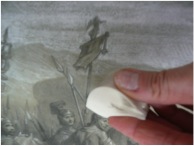
The image below shows the back of the drawing and the wooden support: the edges and dirt. restoration work consisted in dismantling the original frame and removing dust from the entire surface, front and back. Afterwards, the restorers removed both the adhesive tape and the glue previously spread all over the wooden support. The fissures in the paper were newly sealed with special reversible glue and Japanese paper. A very light touch up was performed on the areas where the color was missing. The central part of the drawing was lightly shaded and rendered. Finally, the drawing was mounted on the support and framed.

As shown in the images above the edges of the corners were damaged and ripped. the entire surface was covered with a player of dust a dirt. b7The restoration work consisted in the dismantling of the original frame and removing dust from the entire surface, front and back. Afterwards, the restorers removed both the adhesive tape and the glue previously spread all over the wooden support. The fissures in the paper were newly sealed with special reversible glue and Japanese paper. A very light touch up was performed on the areas where the color was missing. The central part of the drawing was lightly shaded and rendered. Finally, the drawing was mounted on the support and framed.

Detail of the removal of old tape on the back

bel5

Detail of the cleaning of the front with special sponge