by Mary Angela Schroth-
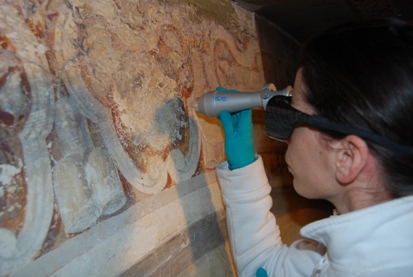
The process of cleaning artwork requires the most selective and non-destructive tools so that minimum impact is made on the pictorial layers during cleaning. Laser technology is one of the techniques utilized by modern restoration laboratories because it is a high-tech solution that can be used with traditional cleaning techniques. Laser technology can be used to clean many different materials: stones, stucco, wall paintings, metal and wood. It guarantees the precise cleaning of objects without any damage to the substrate. Recent laser cleanings have taken place in the restoration of the Santa Rosa Necropolis in order to remove layers of alteration, thus preserving the original pictorial layers. A parallel situation is going on now at the Chapel of S. Lorenzo in the Scala Santa (see photo), where laser technology has been instrumental in various removals of overpainting, one of the difficulties of the project.
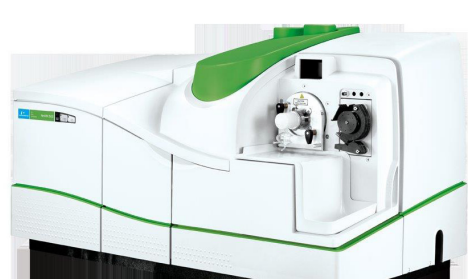
The instrument can operate on extremely degraded substrates without pre-consolidation, allowing the restorer to work with high precision and control because of the pointing system. It’s small size makes this machine perfect for use in laboratories and inside the Museums themselves and for outside projects such as the Scala Santa. This laser is extremely easy to use, allowing the restorer to choose the operating mode directly from the display screen.
The laser’s reliability and precision makes it an essential tool in correctly preserving the timeless treasures within the Vatican Museums, especially because it allows restorers to clean those pieces that cannot be manually cleaned. After attempts with different types of lasers (thanks to the Patrons, the Museums have purchased 2 machines in the last decade), researchers have developed an absolutely innovative laser device. Eos Syntesis is the first laser system set up for laser cleaning that allows restorers to tune the pulse duration by nanoseconds to hundredths of a nanosecond to microseconds. This laser allows for two different pulses to merge in the same laser beam, creating a brand new and innovative process in restorative cleaning. The EPS Synthesis machine is part of the 2015 Wishbook so we are strongly urging its purchase by any individual Patron or Chapter. This will eliminate the high cost of renting the machine (current practice at the Museums), and will thus increase productivity for the various conservation projects as well as represent a long-term investment.
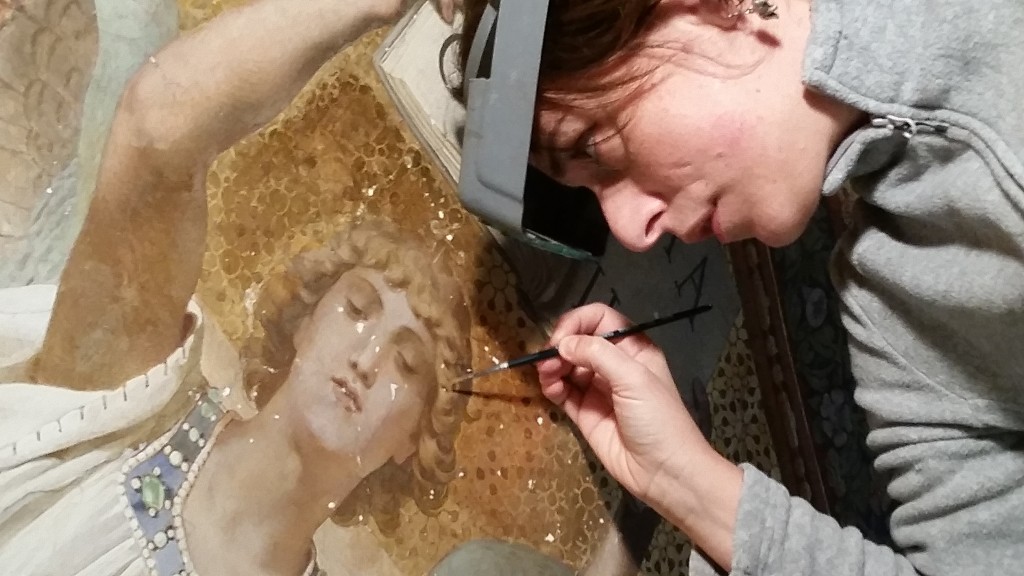 Through speaking with head restorer, Francesca Persegati, we learned that the restorers are very interested in this project because it’s a chance to study and work on 20th century mural painting. The other fact that makes this project unique, is that the paintings aren’t frescoes, but instead Torti and Seitz used tempera colors. In addition, the restoration team has not only cleaned the walls, but they also had to evaluate the damage of the roof and the work that must be done to fix it and prevent future damage.